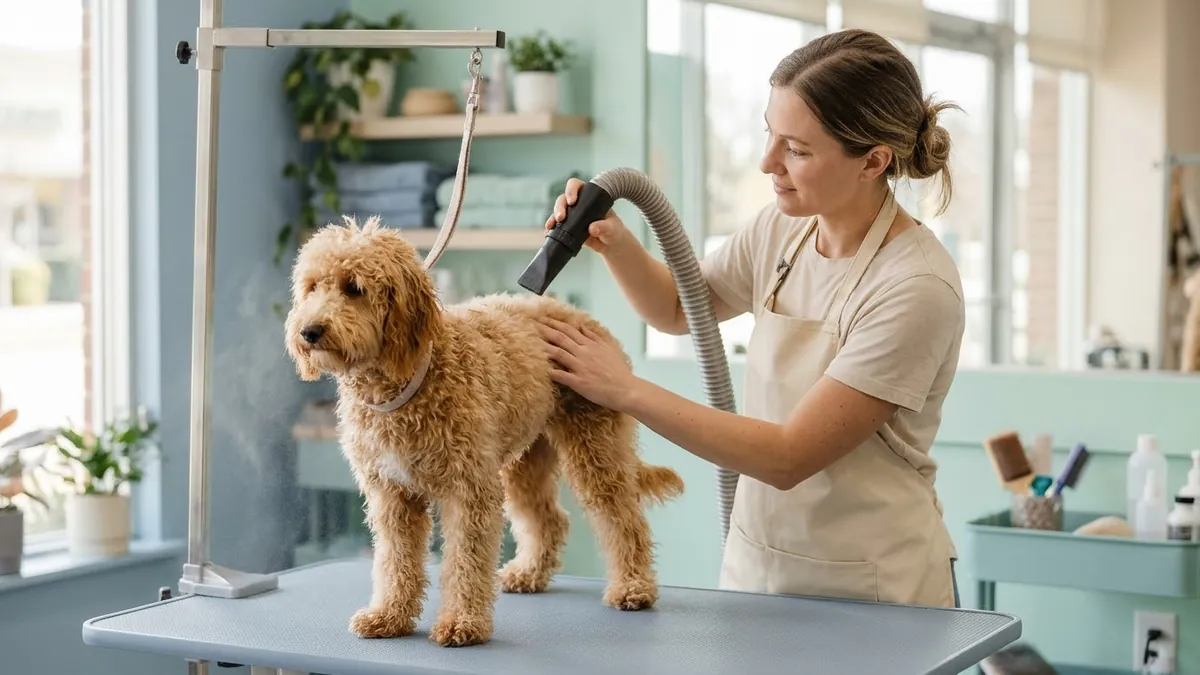
Short answer: almost every groomer asks for proof of a current rabies vaccination. Most also ask for DHPP (distemper and parvo), and many salons add Bordetella. Some add canine influenza. Your exact list depends on your local law, your insurer and how many dogs share your space.
Why groomers ask for vaccines at all
A grooming salon is one of the few places where dogs from many households share the same air, tables, tubs and dryers in a single day. Mobile groomers see one dog at a time, but the van, tools and groomer go from dog to dog. Vaccine requirements reduce the chance that a contagious disease travels with you, and they protect you and your staff if a nervous dog bites.
There is also a legal side. Rabies vaccination of dogs is required by law in almost every state, and some states regulate grooming businesses directly. Colorado, for example, adopted rules in July 2025 that require licensed groomers, boarding kennels and daycares to collect proof of rabies and other core vaccinations before accepting a pet (Denver7 report). If your state licenses grooming businesses, its rules come first.
The vaccines groomers most commonly require
| Vaccine | Why it matters in grooming | How common |
|---|---|---|
| Rabies | Required by law for dogs in most states; the key record if a dog bites a groomer or another dog. | Almost universal |
| DHPP / DAPP | Core vaccine against distemper and parvovirus, both serious and contagious. | Very common |
| Bordetella | Protects against one of the causes of kennel cough, which spreads where dogs share air. | Common in salons |
| Canine influenza | Spreads easily between dogs in shared spaces; often added during local outbreaks. | Less common |
| Leptospirosis | Now listed as core for all dogs in AAHA’s guidelines; some salons include it. | Occasional |
The core/non-core status comes from the AAHA Canine Vaccination Guidelines, which list rabies, distemper, adenovirus, parvovirus and leptospirosis as core, and Bordetella and canine influenza as lifestyle vaccines.
Puppies, seniors and medical exemptions
Puppies cannot have every vaccine on day one. Many groomers accept puppies for a first, short groom once the puppy has had the shots appropriate for its age, and ask for the rest as they are given. For older dogs or dogs with health conditions, a veterinarian may decide not to give a particular vaccine and write an exemption or titer result. Decide in advance whether you accept those, and in what form.
Turning it into a policy clients understand
- List the vaccines you require, for dogs and (if you groom them) cats.
- Say what proof you accept: a certificate or record from the veterinarian that shows the expiration date. A rabies tag alone is not proof. See how to verify a vaccine certificate.
- Say when you need it: at booking, or a set number of days before the appointment.
- Say what happens if it lapses: reschedule, or groom only after an updated record arrives.
- Put it on your booking page and in your confirmation messages, so nobody hears it for the first time at the door.
Our vaccination policy template is written for sitters but adapts easily to a salon or van.
Keeping track between appointments
Most dogs come back every 4–8 weeks, and their vaccines expire on their own schedules. The groomer who notices a lapsed rabies date the morning of the appointment has an awkward conversation; the one who notices a month earlier sends a friendly reminder. Record the next due date of every vaccine and check it when you confirm each booking — or let a tool do it. In Pawlio for groomers, each dog shows Up to date, Expiring soon or Overdue, and owners can get an email 30 and 7 days before a vaccine is due.
Sources
- American Animal Hospital Association, Canine Vaccination Guidelines (2022, updated 2024).
- Denver7, New pet vaccine requirements take effect for Colorado shelters, groomers and boarders (July 2025).
- CDC, Rabies information for veterinarians.
Pawlio shows each pet as Up to date, Expiring soon or Overdue, and can email owners before a vaccine is due. Free for up to 3 pets.
Not legal or veterinary advice. This article is general information for pet care professionals. Vaccine schedules depend on the product label, the pet’s health and your state and local laws: confirm with the pet’s veterinarian, your state or local health department, and your insurer or attorney before you set a policy.